新手掌握高效词汇记忆的四个方法
Learning new vocabulary is a perennial challenge for language learners, often feeling like an endless uphill battle. Many newcomers approach memorization with rote learning – endlessly repeating words and definitions – a method demonstrably inefficient in the long run. Instead, focusing on four interconnected strategies – contextualization, spaced repetition, mnemonics, and active recall – can dramatically accelerate vocabulary acquisition and retention. Contextualization moves beyond isolated definitions, demanding understanding of how a word functions within authentic phrases and sentences. Simply *seeing* a word isn't enough; learners need to analyze its grammatical role, collocations (words it frequently appears with), and the nuances of its meaning as expressed through different contexts. This active engagement with the word’s usage builds a far stronger neural pathway than passive memorization. Consider a word like “ubiquitous” – understanding “ubiquitous coffee shops” illustrates its meaning far better than a dictionary definition.
Spaced repetition systems (SRS) exploit the psychological ‘forgetting curve’, strategically re-introducing vocabulary at increasing intervals just before you’re likely to forget it. This isn't about cramming; it’s about efficient learning. Tools like Anki are excellent, but the principle can be applied manually with simple flashcards or a dedicated notebook. The key is tailoring the review schedule to individual learning speed. Initially, review a new word within minutes, then hours, then a day, then a week, and so on. If you recall it easily, increase the interval. If you struggle, shorten it. This personalized approach combats the natural tendency to forget newly learned material, cementing the vocabulary into long-term memory. Don't rely solely on translation; force yourself to define the word in English and use it in a sentence to further reinforce understanding. This actively tests your comprehension.
Mnemonics, those memory aids we often associate with childhood, remain powerfully effective. They rely on associating new information with something already firmly embedded in your memory—a vivid image, a rhyme, a silly story, or even a personal connection. For example, if struggling with "lachrymose" (tearful), picturing a lake brimming with crying crocodiles might stick. The more unusual or emotionally engaging the mnemonic, the better. It's not about being literal; the goal is to create a memorable association. While mnemonics require initial effort, they provide a readily accessible retrieval cue when you need to recall the word. This method works particularly well for abstract vocabulary or words with similar spellings and pronunciations, helping to differentiate them in your mental lexicon. Avoid overly complex mnemonics that become harder to remember than the original word.

Finally, active recall is arguably the most crucial component. Passive review – simply rereading a list of vocabulary – provides a false sense of fluency. True learning happens when you *force* yourself to retrieve information from memory. This means actively trying to use new words in conversation, writing, or even internal monologue. Quizzing yourself, writing summaries, or explaining concepts using the new vocabulary are all excellent methods. Don't wait for the “perfect” opportunity to use a word; consciously incorporate it into your daily language. The struggle to retrieve the word – and the satisfaction of finally succeeding – strengthens the neural connections associated with that word. This process, repeated consistently, transforms passive knowledge into active competence. The combined application of these four methods – contextualization, spaced repetition, mnemonics, and active recall – represents a significantly more effective strategy than traditional rote learning.
相关文章

鹿优选现金流:真相揭秘
鹿优选作为一款以“会员制”模式运营的社区电商平台,其现金流运作机制与传统电商存在显著差异。核心在于其“社区+供应链”的商业模式,而非单纯的商品销售。鹿优选的核心价值在于构建一个以“品客”为核心的付费会...
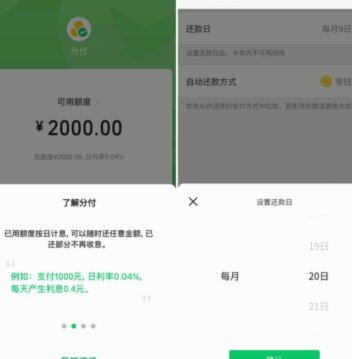
微信分付“套现”:风险与防范
随着移动支付的普及,微信分付作为一种新型的小额信贷服务受到了不少用户的欢迎。这种基于信用评估的借款方式为用户提供了一定程度上的便利和灵活性,但同时也带来了如何安全、合理地使用这项服务的问题。在探讨“套...
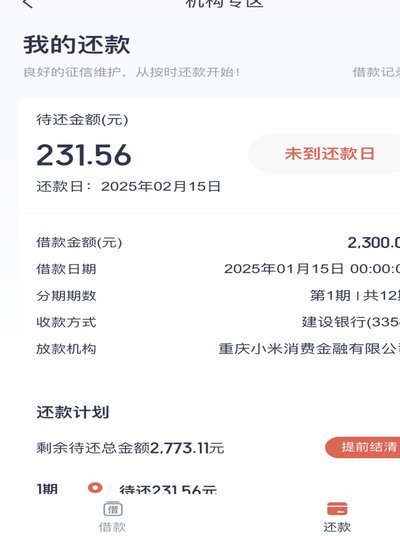
安逸花正规?银行卡错误别慌,先查原因
近年来,网络借贷平台如雨后春笋般涌现,为众多需要资金周转的用户提供了一个便捷的选择。然而,在琳琅满目的选择中,如何辨别一个借款平台是否正规,成为了用户关心的重点问题之一。“安逸花是正规借款平台吗说我银...
为什么得物额度取不了?隐藏的平台取现机制详解
“得物额度取现 取不了”这个问题,看似简单,实则反映了得物平台运营机制和用户体验的复杂性。核心问题在于,得物额度并非传统银行信用卡,而是基于信用评估和消费行为授予的虚拟资金,其取现逻辑与银行取现存在本...

白条陷阱:小企业资金困境与金融体系隐患
“白条取现额度没了”——这不仅仅是一个财务上的突发状况,更是一个反映了现代金融体系中潜在漏洞与风险的警钟。这种现象的核心问题在于,许多个人及小型企业依赖短期流动资金,通过商业票据(即“白条”)进行融资...
羊小咩额度现金提取指南
羊小咩额度如何转化为现金是很多用户关注的话题。随着金融科技的发展,将信用额度高效利用成为可能,而“套现”这一行为也应引起我们的重视和思考。首先,我们需要明确的是,在使用此类服务时,必须遵守相关的法律法...